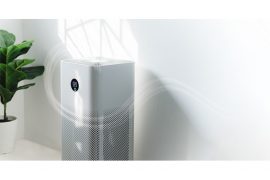

In the Philippines, the tropical heat is a year-round reality. While air conditioning is a lifesaver during “summer” (March to May), the high electricity costs often make it impractical for 24/7 use. This is where the best ceiling fans come in.
A well-chosen ceiling fan doesn’t just push air; it creates a “wind-chill effect” that can make a room feel up to 4 degrees cooler while consuming only a fraction of the power an aircon uses. Whether you’re looking for a sleek modern fixture for your condo or a heavy-duty workhorse for your living room, finding the best ceiling fans in the Philippines can transform your home comfort.
When Should You Consider Buying a Ceiling Fan?
Many homeowners wonder if they should stick to a stand fan or go straight to air conditioning. Here is when a ceiling fan is the superior choice:
- Lower Electricity Bills: A standard ceiling fan uses about the same amount of power as a 60-watt light bulb. If you use it in tandem with your aircon, you can set your AC to 25°C (instead of 20°C) and still feel just as cool, saving up to 40% on your monthly bill.
- Improved Air Circulation: Unlike stand fans that cool only one spot, ceiling fans circulate air throughout the entire room, preventing “hot spots” in corners.
- Limited Floor Space: In smaller Philippine condos or studio units, floor space is premium. A ceiling fan clears up the clutter while providing better airflow.
- For Aesthetic Upgrades: Modern ceiling fans now serve as “functional art,” acting as a centerpiece for your dining or living room.
Factors to Consider in Choosing the Right Ceiling Fan
Don’t just buy the first one you see on Shopee. Consider these “Pinoy-specific” factors:
1. DC Motor vs. AC Motor
This is the most important tech choice.
- DC Motors: These are the best ceiling fans for energy savings. They use up to 70% less electricity than AC models, are almost silent, and often offer 6+ speed settings.
- AC Motors: More budget-friendly and easier to repair, but slightly noisier and consume more power.
2. Blade Span (Size Matters)
A fan that is too small for a room won’t move enough air, while one that is too large can be overwhelming.
- Small Rooms (Up to 75 sq. ft.): 29 to 36 inches.
- Medium Rooms (76–150 sq. ft.): 42 to 48 inches (Standard bedroom size).
- Large Rooms (150–225 sq. ft.): 52 to 56 inches (Living rooms).
3. Ceiling Height and Mounting
For safety and optimal airflow, the blades should be at least 7 to 8 feet above the floor. If you have a high ceiling (common in newer houses), you will need a “downrod” to bring the fan lower. If you have low ceilings, look for “Flush Mount” or “Hugger” fans.
4. Blade Material
In humid coastal areas or provinces, metal blades can eventually rust. Look for ABS Plastic or Seasoned Wood blades which are durable and easier to clean in the Philippine climate.
Best Ceiling Fans in the Philippines: Top Product Suggestions
We’ve curated the best ceiling fans Philippines has to offer, categorized by their best use case.
1. The “Reliable Classic”: Asahi C-56 Ceiling Fan
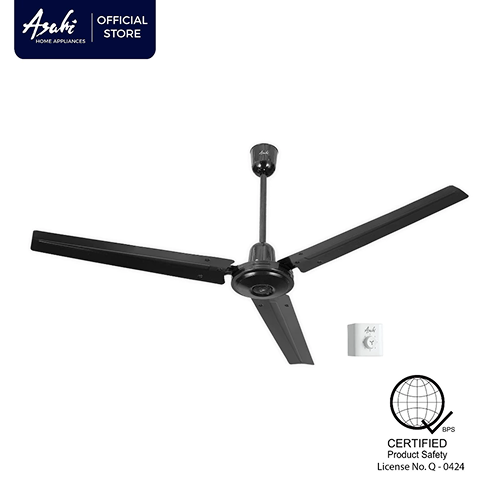
Asahi is a household name for durability. The Asahi C-56 is a 56-inch powerhouse that is perfect for traditional Filipino living rooms. It features a heavy-duty motor and metal blades that provide high-velocity airflow even on the lowest setting.
- Key Feature: Industrial-grade durability and 5-speed wall control.
- Check for more products: Asahi Official Store on Shopee
2. The “Modern Aesthetic”: Gogeous LED Ceiling Fan with Remote
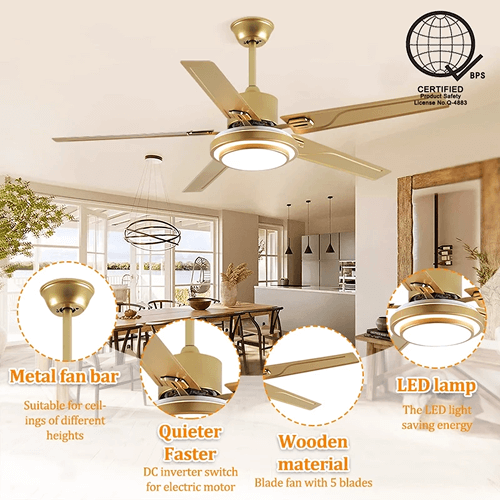
Perfect for modern condos, the Gogeous LED Ceiling Fan with Remote combines a light fixture with a silent DC motor. It features retractable blades (or sleek wood-grain fixed blades) and a remote control that lets you change the light color from warm to cool white.
- Key Feature: Silent DC motor with 6-speed settings and tricolor LED light.
- Check for more products: Gogeous Smart Home on Shopee
3. Classic Elegance Meets Powerful Cooling: Big Brute 52″ Antique Design
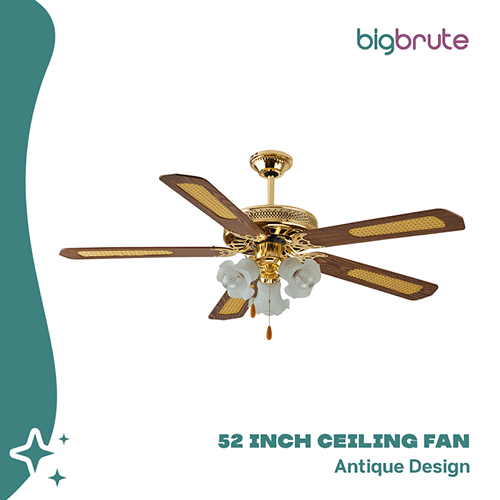
The elegant Big Brute 52″ 5-blade fan combines vintage aesthetics with modern performance, featuring a full copper motor and three integrated light fixtures to serve as a stunning centerpiece for traditional Filipino homes.
- Key Feature: Versatile 2-in-1 airflow technology with a reversible motor that allows for downward cooling in summer and upward air circulation during cooler months.
- Check for more products: Big Brute Official Store on Shopee
4. The “Outdoor Specialist”: Westinghouse Industrial 3-Blade
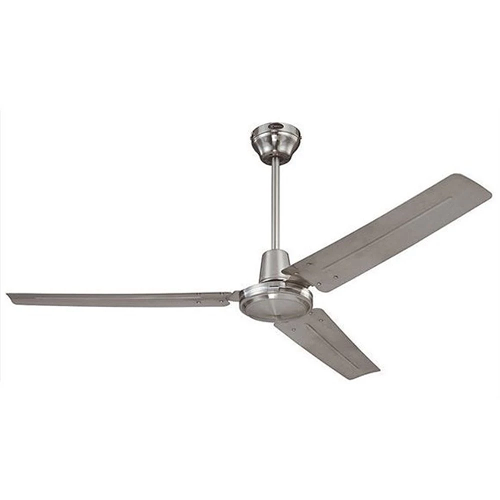
For patios, balconies, or open-air “dirty kitchens,” the Westinghouse Industrial 3-blade fan is built to withstand higher humidity. Its simple 3-blade design is focused purely on moving large volumes of air.
- Key Feature: High CFM (Cubic Feet per Minute) for maximum cooling power in open spaces.
- Check for more products: Ace Hardware on Shopee
Frequently Asked Questions (FAQs)
Are 3 blades or 5 blades better for a ceiling fan?
In terms of airflow, 3-blade fans are actually more efficient and move air faster because they have less “drag” on the motor. 5-blade fans are generally quieter and offer a more consistent, “gentle” breeze, which many people prefer for bedrooms.
How much does it cost to run a ceiling fan in the Philippines?
On average, running a standard ceiling fan for 10 hours a day will only add about ₱50 to ₱100 to your monthly Meralco bill. In contrast, an aircon can add several thousand pesos for the same usage.
Can I install a ceiling fan myself?
If you are replacing an existing light fixture and have basic electrical knowledge, it is possible. However, because ceiling fans are heavy and vibrate while spinning, we highly recommend hiring a professional electrician to ensure the “J-box” (mounting box) is properly reinforced.
Does a ceiling fan actually lower the temperature?
No. A ceiling fan cools people, not rooms. It uses the “wind-chill effect” to evaporate sweat from your skin more quickly. This is why you should turn the fan off when you leave the room to save electricity—it’s not “cooling” the air while you’re gone!
Ready to Beat the Heat?

Finding the best ceiling fans for your home is the smartest way to balance comfort and cost. Whether you go with a heavy-duty Asahi for your veranda or a sleek, remote-controlled Hayes DC fan for your bedroom, you’ll immediately feel the difference in your home’s “presko” (fresh) factor. Looking for something different? Check out our blog on the best air cooler fans in the Philippines.
Don’t wait for the next heatwave to strike—upgrade your air circulation today!