

Riding a car in this Manila traffic prolongs my commute for an hour. That’s why ditching the car for a set of two wheels is definitely a lifestyle upgrade. Whether you’re looking to save money on gas, get your morning cardio in, or escape the stress of traffic, choosing the right commuter bike is the first step toward a better morning routine to kickstart your day with a bang.
In this guide, we’ll break down what a commuter bike is, how you can choose the appropriate bike, and a list of cycling gears you need for a smoother trek.
What is a Commuter Bike?
Defining a commuter bike lies in its purpose. Unlike specialized racing bikes designed for speed or mountain bikes built for rugged trails, a commuter bike is built for practicality, durability, and comfort on paved surfaces.
These bikes are hybrid-style bicycles, often featuring reinforced frames and mounts for carrying your essentials.
Things to Consider When Buying A Commuter Bike
Credits: Pinterest
I get you. If you’re a non-expert biker like me, you’re also probably choosing a bicycle based on its color and look. But ever since I switched to biking, I’ve learned that there are certain things you need to prioritize.
Here are technical specs you may want to consider:
1. Frame Material
- Aluminum: Lightweight and rust-resistant. Most modern commuters use aluminum because it’s affordable and easy to carry up apartment stairs.
- Steel: Heavier but incredibly durable. Steel offers a more graceful ride that absorbs road vibrations better than aluminum.
2. Gear Type
- Single-Speed: A single-speed commuter bike has exactly one gear—just like the bike you likely had as a kid. There are no shifters and no cables to worry about. It’s perfect for flat cities since you’ll be needing more force when it comes to steeper routes.
- Geared: These bikes use a derailleur (the moving metal arm by the back wheel) to move the chain between different-sized cogs so it needs a bit more maintenance. Think of this like the transmission in a car. When you’re going uphill, you shift into a low gear to make pedaling feel light and easy. When you’re flying down a straightaway, you shift into a high gear so you can go faster without losing leg control.
3. Tires
- Thinner tires: Usually found on performance or road-style bikes, these tires are narrow and high-pressure. They have less contact with the ground, which means less friction. You’ll feel fast and zippy, and it takes less energy to maintain your speed on smooth, paved roads.
- Wider tires: These are the standard for most modern commuters and hybrid bikes. Think of these like a pair of high-quality sneakers with extra cushioning. Because they hold more air, they act like natural shock absorbers. They provide a much more stable feeling especially when turning corners or hopping over small curbs.
4. Accessory Mounts
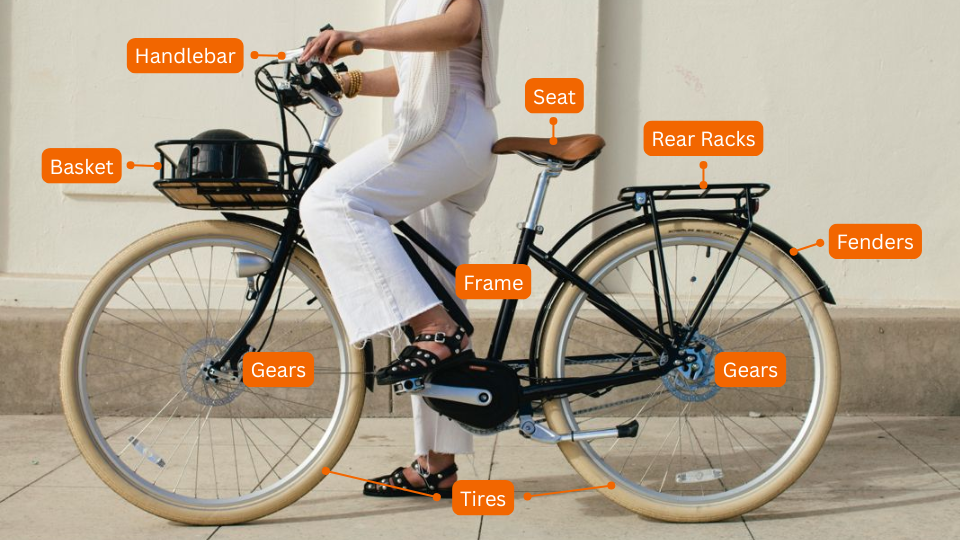
- Rear Racks: To hold your bags, pouches, or containers.
- Fenders or wheel hoods: To keep road spray off your back when it rains.
- Baskets: Optional but handy for quick grocery runs.
5. Handlebars and Seat
- Flat or Riser Bars: Best for visibility and control in traffic.
- Saddle Seat: Look for a medium-width saddle. Contrary to popular belief, “squishier” isn’t always better for long rides; support is key.
Essential Cycling Gear
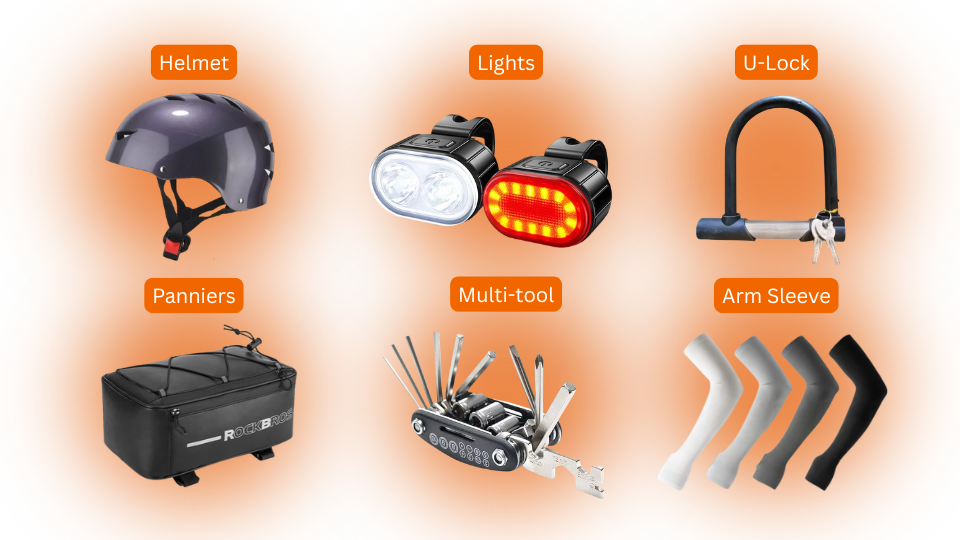
To make your journey extra safe and comfortable, you’ll need the right cycling gear. Here is your must-have checklist:
- Helmet: Non-negotiable. Look for MIPS technology for advanced protection.
- Lights: High-lumen front and rear lights are essential for visibility, even during the day. Bonus tip: Look for the rechargeable ones!
- U-Lock: Invest in a high-quality lock so you may park it anywhere safely.
- Panniers: Waterproof bags that clip onto your rack to keep your back sweat-free.
- Multi-tool: A small kit for mid-ride adjustments.
- Arm Sleeve: This provides you extra sun protection aside from sunscreen.
Frequently Asked Questions (FAQs)
Do I need a special license to ride a commuter bike?
No! As long as it is a standard bicycle or an e-bike within the Category L1a and L2a, no license is required.
How do I maintain my bike for daily use?
Keep your chain oiled, check your tire pressure weekly, and ensure your brakes are responsive. A professional tune-up once every six months is recommended.
What is the difference between a road bike and a commuter bike?
A road bike usually features drop bars or curled handlebars that tuck the rider into a leaned-forward, aerodynamic position. They are lightweight and use thin tires, but they often lack the durability and attachment points needed for heavy daily use. On the other hand, a commuter bike is built with sturdier frames and wider tires to handle potholes, and it almost always includes mounts for cycling gear.
Commute with Comfort and Convenience
Now that you’re knowledgeable, you can now choose the best option and shop for the commuter bike and gears perfect for your needs and liking.
If you’re finding one online, it’s best to #CheckShopeeFirst to access top-rated products, deals, and daily free shipping! For added savings, subscribe to Shopee VIP and unlock exclusive vouchers and perks.